ENGLISH: (214) 901-3251
ENGLISH OR SPANISH: (972) 533-0340 / (469) 790-8047
ENGLISH: (214) 901-3251
ENGLISH OR SPANISH: (972) 533-0340 / (469) 790-8047
ENGLISH: (214) 901-3251
ENGLISH OR SPANISH: (972) 533-0340 / (469) 790-8047
ENGLISH: (214) 901-3251
ENGLISH OR SPANISH: (972) 533-0340 / (469) 790-8047
So you've decided to go independent. Maybe you've spent years running machines for someone else and you're ready to work for yourself. Maybe you're a tradesperson who sees the demand for excavation work in Texas and wants to capitalize on it. Either way, one of the first — and most important — questions you'll face is: what equipment do I need to start an excavating business in Texas without blowing my startup budget before the first job is done?
The good news is that you don't need a full fleet on day one. The bad news is that plenty of new excavation business owners overbuy early, stretch their cash flow, and struggle before they ever get traction. This guide will walk you through the equipment list, the Texas-specific regulations, the financing options, and the smartest way to put together your first fleet — without overcommitting.
The honest answer is: less than you think. When you're figuring out how to start an excavation business, the temptation is to build out a full equipment lineup right away. Resist it. Your goal on day one is to be able to take on and complete the jobs you're actually being hired for — residential site prep, utility trenching, land clearing, drainage work, and foundation digging make up the bulk of what most startup excavation companies in Texas are doing in their first year.
For that kind of work, you need a machine that digs, a machine that moves material, and a way to haul them. Everything else can come later as your revenue and job scope grow.
For most Texas excavation startups, the minimum viable fleet is a mini excavator paired with a skid steer or compact track loader. That combination lets you handle the vast majority of residential and light commercial excavation work, and it keeps your excavation business startup cost at a manageable level compared to loading up on full-size iron right out of the gate.
A used mini excavator handles digging, trenching, and grading with precision in tight spaces — exactly the kind of work you'll find on most early residential contracts. A used skid steer for sale or compact track loader for sale handles material movement, backfilling, and site cleanup. Together, they're versatile enough to keep you busy and profitable while you build your reputation.
Browse our used mini excavators for sale in Texas and used excavators at Himes Equipment to see what's currently available across a range of sizes and price points.
This is one of the most common questions for anyone learning how to start a construction company in Texas focused on excavation work. The answer almost always points toward starting with a used mini excavator rather than a full-size machine — for a few practical reasons.
First, mini excavators are cheaper to buy, cheaper to transport, and easier to operate for newer crews. Second, a significant portion of excavation startup work in Texas involves residential lots, which are often accessible only to compact equipment. Third, in North Texas soil conditions — the dense black clay in the DFW area, the caliche found in Central and West Texas — a compact machine with good hydraulic force is often more than adequate for the depth and scope of typical early contracts.
When your jobs consistently demand deeper cuts, larger footprints, or heavier material handling, that's the signal to move up to a full-size excavator. Starting with a used mini excavator keeps your initial investment lower and your monthly payment more manageable while you're building cash flow.
For most excavation startups, a used skid steer for sale or a compact track loader for sale is a higher priority than a dozer. Skid steers and CTLs are more versatile on smaller job sites, easier to trailer, and useful across a wider range of early-stage work. A used bulldozer for sale becomes essential when you're taking on larger land clearing contracts, significant grading work, or rough terrain jobs — but those typically come after you've established your business and secured larger contracts.
If your first contracts involve serious land clearing or pushing large volumes of material across open sites, then a dozer may belong in your startup fleet. Otherwise, start with a skid steer or CTL and add a dozer once the work justifies it. Check out our used dozers for sale at Himes Equipment when you're ready to add one to your fleet.
When you're calculating the excavation business startup cost, buying used construction equipment in Texas is almost always the right call. A new mini excavator can run $50,000–$90,000 or more, depending on the model. A quality used mini excavator can put you in the seat for $20,000–$45,000, depending on hours and condition, a meaningful difference when you're also covering licensing, insurance, a trailer, and operating capital.
Used heavy equipment does require more diligence upfront: a thorough heavy equipment inspection, a review of service records, and verification that the title is clean. But those steps are manageable, and the savings are substantial. For a deeper look at the tradeoffs, our guide on used vs. new excavators: which is right for your business walks through the numbers in detail.
Starting an excavation company in Texas means navigating a few key regulatory requirements before you break ground on your first job.
TCEQ Construction General Permit: If your project disturbs one acre or more of land, you're required to obtain coverage under the Texas Commission on Environmental Quality's Construction General Permit (CGP) and implement a Storm Water Pollution Prevention Plan (SW3P). This applies to most grading and site prep work on larger residential and commercial projects. Failing to comply can result in significant fines, so get familiar with the TCEQ construction permit Texas requirements early.
Texas 811 — Call Before You Dig: Texas law requires you to contact Texas 811 at least 48 hours before any excavation work begins. This notifies underground utility operators who will mark the locations of buried lines on your job site. The Texas 811 call-before-you-dig requirement isn't optional — it protects your crew, your equipment, and your business from serious liability.
Texas contractor license requirements for excavation work vary depending on the type of work performed. General excavation typically doesn't require a state-issued contractor license, but plumbing, electrical, and utility connections do. Check with the Texas Department of Licensing and Regulation (TDLR) and your local municipality for any additional permitting requirements in your area.
Whether you need a commercial driver's license to haul your own equipment depends on the combined weight of your truck and trailer. In Texas, a CDL is required when your combined gross vehicle weight rating (GVWR) exceeds 26,001 pounds. For most setups hauling a mini excavator or skid steer on a standard equipment trailer, a Class A CDL is required. For full details on thresholds and exemptions, see our post on CDL requirements for hauling equipment in Texas. CDL requirements for Texas heavy equipment hauling are worth understanding before you invest in a truck and trailer — or before you decide to subcontract hauling instead.
Equipment financing for a new business in Texas is more accessible than many startup owners expect. Lenders who specialize in used equipment financing understand that construction businesses are capital-intensive from day one, and many programs are designed specifically for new business owners without a long operating history.
At Himes Equipment, we work with Mazo Capital to offer fast, flexible used equipment financing with approvals typically within one to two business days. Terms are transparent upfront — you'll know your rate, fees, and payment schedule before you sign anything. For more details on how the process works, visit our page on financing used heavy equipment in Texas.
Starting with used equipment and financing it conservatively is the smartest way to manage your cash flow in year one while keeping your fleet operational and your overhead under control.
When you're ready to buy used construction equipment in Texas for your startup, you want a dealer who owns the machines outright, provides honest condition reporting, and stands behind what they sell. For a full breakdown of what to look for, our complete guide to buying used construction equipment in Texas covers everything from inspection checklists to title verification.
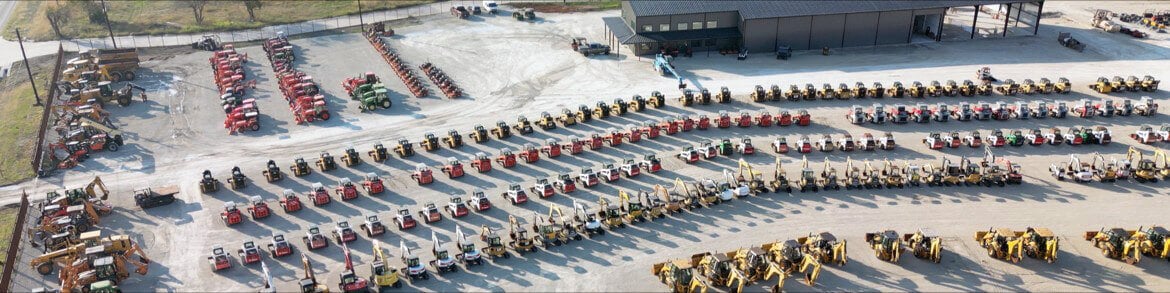
Himes Equipment, based in Van Alstyne just north of Dallas–Fort Worth, carries over 650 used machines on a 21-acre lot — including used mini excavators, full-size excavators, skid steers, compact track loaders, and dozers. Every machine comes with a walk-around video showing real operational condition, and every title is verified clean before it hits our inventory. Whether you're buying your first machine or building out a fleet, our bilingual team is here to help you find the right equipment at the right price.
Request a quote from Himes Equipment today and let's get your excavation business off the ground.