ENGLISH: (214) 901-3251
ENGLISH OR SPANISH: (972) 533-0340 / (469) 790-8047
ENGLISH: (214) 901-3251
ENGLISH OR SPANISH: (972) 533-0340 / (469) 790-8047
ENGLISH: (214) 901-3251
ENGLISH OR SPANISH: (972) 533-0340 / (469) 790-8047
ENGLISH: (214) 901-3251
ENGLISH OR SPANISH: (972) 533-0340 / (469) 790-8047
Ask five different skid steer owners how much their machine weighs and you'll likely get five different answers, none of them wrong. A skid steer built for tight residential lots might weigh under 4,000 pounds, while a large-frame machine built for heavy grading and demolition can push past 10,000. The gap comes down to operating class, and matching the right one to your trailer, jobsite access, and lifting needs matters more than most buyers realize until they've hauled the wrong machine to a job that couldn't fit it.
Texas contractors and buyers comparing options often start with a single number in mind, then discover that weight alone doesn't tell the whole story once width, lift capacity, and trailer limits enter the picture. This breakdown covers how skid steer weight, width, and rated operating capacity shift across operating classes, so you can settle on the right size before you buy or rent.
Skid steer weight ranges widely depending on frame size, typically falling between 5,000 and 9,000 pounds for standard machines, with compact models coming in lighter and large-frame units running heavier. Operating weight, the figure most manufacturers list on their spec sheets, includes the machine itself along with fluids and a standard bucket attachment, though it doesn't account for additional attachments that add weight once installed.
Skid steers are generally grouped into three operating classes based on rated operating capacity and horsepower. Small frame machines typically weigh 5,000 to 6,500 pounds and suit residential work, tight urban lots, and light landscaping. Medium frame machines run roughly 6,500 to 8,500 pounds and handle a broader range of construction and agricultural tasks. Large frame machines, often exceeding 8,500 pounds, are built for heavy grading, demolition, and material handling where lift capacity and pushing power matter more than maneuverability in tight spaces.
These classes aren't rigid boundaries so much as general groupings, and manufacturers sometimes blur the lines between medium and large frame depending on how a specific model is configured. Rather than relying on the class label alone, it's worth comparing the actual operating weight, width, and rated operating capacity of individual models within a class, since two machines marketed in the same category can still differ by a thousand pounds or more.
Beyond frame class, weight differences come down to engine size, counterweight design, undercarriage type, and cab configuration. Tracked skid steers generally weigh more than wheeled models of the same operating class because of the added undercarriage components, even though both may share similar horsepower and lift ratings. Enclosed cabs, additional counterweights for lift stability, and heavier-duty hydraulic systems all add pounds that a bare spec sheet number doesn't always explain on its own. For a closer look at how to read those numbers correctly, our guide on understanding equipment spec sheets walks through what each figure represents.
Operating weight and lift capacity measure two different things, and confusing them leads to poor equipment choices. Operating weight is simply how much the machine itself weighs, which matters for trailering and ground pressure. Lift capacity, often expressed as rated operating capacity, measures how much the machine can safely lift and carry without tipping. A heavier machine doesn't automatically lift more. Frame design, counterweight placement, and hydraulic strength determine lift capacity independently of total operating weight, which is why two machines of similar weight can have very different lifting ability.
Skid steer width typically ranges from about 48 inches on compact models to over 70 inches on large frame units, and that dimension often matters as much as weight when access is tight. Narrow gates, indoor jobs, and fenced residential lots frequently rule out larger machines regardless of how much lift capacity they offer. Before choosing a weight class based purely on the work you need done, it's worth confirming the machine will fit through every access point on the jobsite, since a few extra inches of width can eliminate an otherwise ideal machine from consideration.
Mini skid steers, sometimes called compact utility loaders, typically weigh between 1,500 and 3,000 pounds, considerably lighter than even the smallest standard frame class. These machines trade lift capacity and power for the ability to work in spaces a full-size skid steer simply can't access, like narrow side yards, indoor renovation sites, or landscaping projects with limited clearance. For contractors who need both, pairing a mini skid steer with a standard-frame machine often covers more job types than either one alone.
Trailer capacity is often the deciding factor buyers overlook until it's too late. A half-ton truck paired with a standard trailer usually handles small to medium frame skid steers comfortably, while large frame machines typically require a heavier-duty trailer and a three-quarter or one-ton tow vehicle to stay within safe towing limits. Before committing to a weight class based on job requirements alone, confirm your trailer and tow vehicle can handle the combined weight of the machine, attachments, and trailer itself, since exceeding those limits creates a real safety and legal liability on the road.
It's also worth accounting for attachments when calculating total towed weight. A bucket, pallet forks, or a grapple attachment can add several hundred pounds beyond the machine's base operating weight, and that difference is enough to push a borderline setup over a trailer's rated capacity.
Rated operating capacity tells you how much a skid steer can safely lift and carry, typically calculated as a percentage of the machine's tipping load. This figure matters more than raw operating weight for buyers focused on material handling, pallet work, or heavy attachments, since it directly answers whether a machine can handle the loads your jobs require. Comparing rated operating capacity across similarly sized machines, rather than assuming weight and lift ability track together, gives a clearer picture of which model fits the work. If you're also weighing whether a skid steer or a different type of compact machine fits your needs better, our comparison of compact track loaders vs. skid steers covers that decision in more depth.
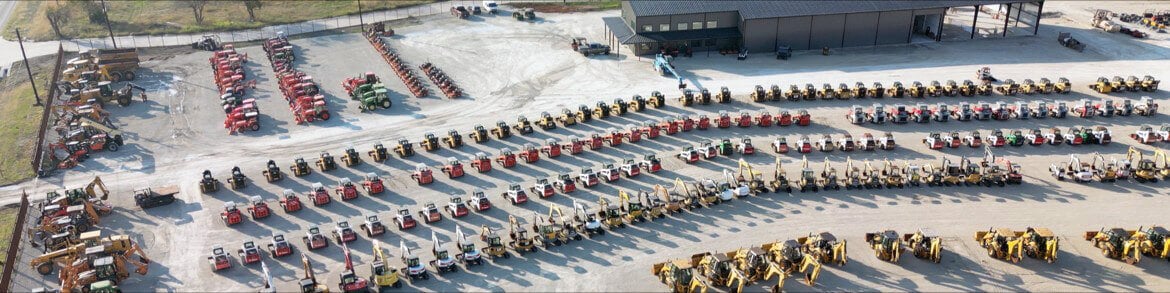
Matching weight class to your jobsite access, trailer capacity, and lifting needs takes more than a single spec number, and getting it wrong means either an underpowered machine or one that can't fit where you need it. Himes Equipment stocks skid steers across small, medium, and large frame classes, all inspected and owned outright on our 21-acre lot in Van Alstyne.
Ready to compare specs on an actual machine? See what's currently in stock or reach out with any questions about which weight class fits your trailer and job requirements.