ENGLISH: (214) 901-3251
ENGLISH OR SPANISH: (972) 533-0340 / (469) 790-8047
ENGLISH: (214) 901-3251
ENGLISH OR SPANISH: (972) 533-0340 / (469) 790-8047
ENGLISH: (214) 901-3251
ENGLISH OR SPANISH: (972) 533-0340 / (469) 790-8047
ENGLISH: (214) 901-3251
ENGLISH OR SPANISH: (972) 533-0340 / (469) 790-8047
An excavator is already one of the most useful machines on a job site. Add the right excavator attachments and it becomes five machines in one. For contractors who want to take on more work without buying more iron, attachments are the most cost-effective investment you can make in a machine you already own. This guide covers the five best excavator attachments for expanding what your machine can do across demolition, drilling, land clearing, and material handling.
Renting or buying a second machine to handle one additional task is an expensive solution to a problem that attachments can solve for far less. The right excavator attachment costs a fraction of that and mounts to equipment you already have. That math is straightforward, but the operational benefit goes further. When you can switch your excavator from digging to breaking to drilling to clearing without leaving the job site or calling in additional equipment, you keep your crew moving and your overhead lower.
Mini excavator attachments follow the same logic at a smaller scale. A compact machine with a full set of attachments can handle an impressive range of residential and commercial work that would otherwise require multiple pieces of equipment and multiple mobilization costs. For a similar breakdown on skid steer versatility, see our post on essential skid steer attachments for productivity.
A hydraulic hammer, also called a hydraulic breaker for excavators, is the attachment that opens up demolition work to any contractor who owns a standard excavator. Concrete slabs, rock ledges, asphalt, foundations… a hydraulic breaker for excavators handles all of it without a dedicated demolition machine on site.
For Texas contractors dealing with caliche or rock in excavation work, a hydraulic hammer attachment is often a job-site necessity rather than a luxury. Hard material that would take hours to work around with a bucket can be broken up and cleared in a fraction of the time. The hydraulic hammer is one of the best excavator attachments available for expanding the types of work you can bid on, and it's a standard piece of demolition equipment for contractors who do any mix of earthwork and site clearing. For a look at how attachments factor into broader equipment decisions, see our post on how to choose the right equipment for your Texas project.
An excavator auger turns your machine into a precision drilling tool. Foundation piers, fence posts, solar installations, utility poles, tree planting, any job that requires a clean, uniform hole at depth is a job for an excavator auger attachment. Augers come in a wide range of bit diameters and can handle soil, clay, and softer rock depending on the tooth configuration.
For contractors bidding on fencing projects, land development work, or foundation drilling, adding an auger to your excavator attachment lineup means you're not renting a separate drill rig or subcontracting the hole work. Mini excavator attachments in the auger category are particularly popular for residential and landscaping applications where a full-size rig is too large for the site. If you're evaluating how attachments extend the value of a compact machine, the excavator auger is one of the most versatile options available.
A hydraulic thumb attachment works exactly the way it sounds. It gives your excavator bucket a second point of contact, allowing the machine to grip irregular objects like rocks, logs, debris, brush, and concrete chunks the way a hand grips an object rather than just scooping or pushing it.
Without a thumb, moving large debris or clearing brush requires multiple passes and a lot of repositioning. With a hydraulic thumb, you pick up what you're after and place it precisely. The excavator thumb attachment is one of the most practical upgrades available for contractors doing demolition cleanup, land clearing, or any work that involves moving material that won't cooperate with a standard bucket. It's a low-cost addition relative to the productivity it adds and one of the best excavator attachments for day-to-day site work.
A land clearing grapple is built for exactly what its name suggests. It's a heavy-duty clamping attachment designed to grab, lift, and move brush, trees, stumps, and woody debris across large clearing projects. For Texas landowners and contractors taking on land clearing work, a grapple attachment turns an excavator into a capable clearing machine without the need for a dedicated piece of land clearing equipment.
Grapples come in rotating and fixed configurations. A rotating grapple gives you more flexibility in placing material, which matters on large acreage clearing jobs where you're stacking brush or loading trailers. Fixed grapples are simpler and lower maintenance, and they handle the majority of clearing applications effectively. Either way, adding a grapple to your excavator attachment inventory expands the land clearing work you can take on with equipment you already own, and it's one of the strongest arguments for thinking of your excavator as a multi-tool rather than a single-purpose machine. For context on how excavators compare to other machines for site clearing work, see our post on powerful dozens for Texas construction projects.
Every attachment on this list becomes more useful when you can switch between them in under a minute. That's what quick couplers do. A hydraulic quick coupler lets you change excavator attachments from the cab without getting out of the machine, which eliminates the manual pin-pulling process that makes operators reluctant to switch attachments mid-job.
Without quick couplers, the practical friction of changing attachments often means contractors stick with one setup for the day even when a different attachment would do the job better. With a quick coupler system in place, switching from your bucket to your hydraulic hammer to your auger is a two-minute operation. The result is a machine that actually functions as a multi-tool on a daily basis rather than in theory. Quick couplers are one of the most straightforward productivity investments available for any operator running multiple mini excavator attachments or full-size excavator attachments on active job sites.
Not every attachment fits every machine. Compatibility depends on your excavator's operating weight, hydraulic flow rate, and coupler configuration. Most attachment manufacturers publish compatibility specs by machine weight class, and matching those specs is important. An undersized machine running an oversized hydraulic hammer will wear out components faster and perform poorly.
Hydraulic flow is the other key variable. High-demand attachments like hydraulic hammers and augers require a minimum flow rate from the host machine's auxiliary hydraulics. If your excavator's auxiliary flow doesn't meet the attachment's requirements, performance will be limited regardless of the physical fit. Before you buy any excavator attachments, confirm the hydraulic flow specs on your machine against the attachment manufacturer's requirements. For guidance on evaluating used machines and their attachment capability, see our post on what to look for when buying used backhoe loader.
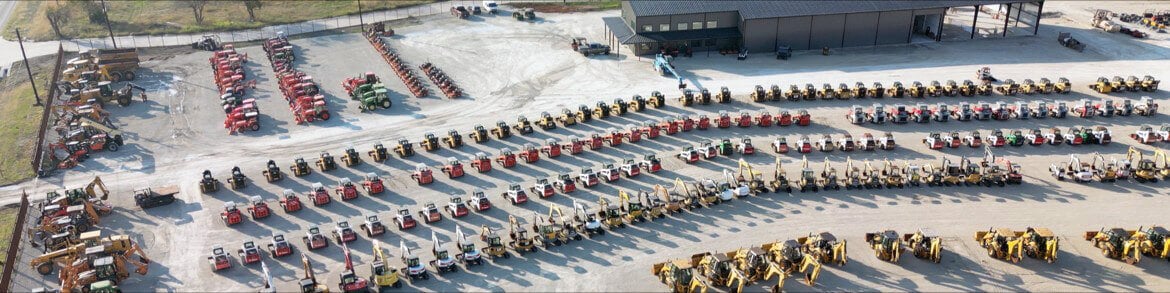
Himes Equipment carries excavator attachments for a range of machine sizes and applications, all available through the same transparent, no-broker inventory process as our used equipment. Every attachment is owned outright, priced directly, and available to inspect in person at our 21-acre facility in Van Alstyne, TX.
Browse our excavator attachments for sale to see what's currently in stock, or give us a call and our team will help you identify the right attachment for your machine and the work you're taking on.