ENGLISH: (214) 901-3251
ENGLISH OR SPANISH: (972) 533-0340 / (469) 790-8047
ENGLISH: (214) 901-3251
ENGLISH OR SPANISH: (972) 533-0340 / (469) 790-8047
ENGLISH: (214) 901-3251
ENGLISH OR SPANISH: (972) 533-0340 / (469) 790-8047
ENGLISH: (214) 901-3251
ENGLISH OR SPANISH: (972) 533-0340 / (469) 790-8047
Urban construction in Dallas and Austin looks different than it did ten years ago. Lots are smaller, streets are busier, and neighbors are closer. The equipment strategies that work on open suburban sites don't always translate when you're working in Uptown Dallas, the East Austin corridor, or any dense infill neighborhood where space is the first constraint on every decision. For urban contractors in these markets, small construction equipment isn't a compromise. It's the right tool for the job.
Both Dallas and Austin are in the middle of sustained construction booms driven by population growth, commercial development, and urban infill. That growth is pushing contractors into tighter and more complex environments, where a standard excavator or full-size wheel loader simply won't fit through the gate, let alone maneuver on the site itself.
The result is a practical equipment problem. Contractors who try to force large machines into compact construction environments lose time on every cycle, damage finished surfaces they've already paid to protect, and create safety risks from reduced visibility in tight quarters. The contractors who consistently win urban work are the ones who show up with the right compact equipment for the site conditions. For a broader look at how equipment choices are shaping the Texas construction market, see our post on Texas construction trends to watch for in 2026.
Compact construction equipment is generally defined by operating weight, overall width, and tail swing. For urban jobsites, overall width is often the binding constraint. A machine that's 60 inches wide can fit through a standard gate and navigate between structures. A machine that's 96 inches wide can't, no matter how capable it is otherwise.
Tail swing matters almost as much. Zero tail swing or reduced tail swing excavators can rotate freely in confined spaces without swinging past the machine's tracks, which is critical when you're working within feet of a structure or a property line. Weight also factors in when you're working on finished pavement or near existing utilities. Lighter compact equipment exerts less ground pressure and is less likely to cause surface damage or underground displacement on sensitive urban sites.
The mini excavator is the most versatile piece of small construction equipment available for urban work. A mini excavator for sale in the 1.5 to 6-ton range can fit through narrow access points, work within inches of structures, and handle the full range of urban excavation tasks: utility trenching, foundation work, demo, drainage, and landscaping.
Mini excavators for sale in this weight class are widely available in the used market, and they hold their value well because demand for compact construction equipment in urban markets has grown steadily. For Dallas and Austin contractors, a quality used mini excavator is often one of the best investments in a compact fleet, covering more job types per machine than almost any other piece of light construction equipment available. For guidance on how to match compact equipment to specific project types, see our post on how to choose the right equipment for your Texas project.
Skid steers and compact track loaders both belong on urban construction sites, and the choice between them comes down to the surface conditions you're working on. A wheeled skid steer, including popular models like the John Deere skid steer lineup, moves faster on hard flat surfaces like concrete and asphalt, costs less to own, and handles well in open urban staging areas. A John Deere compact track loader, or any comparable CTL, is the better call on soft fill, freshly graded surfaces, or sites where you need to minimize surface damage.
In Austin's clay-heavy soils and on Dallas infill sites with disturbed ground, a compact track loader's lower ground pressure and superior traction give it a real operational edge over a wheeled machine. The John Deere mini skid steer category also deserves mention for the tightest sites, where even a standard skid steer footprint is too large. Mini skid steers and compact utility loaders fit through doorways and narrow corridors that nothing else can access. For help deciding which machine fits your crew's typical workload, see our post on choosing the right skid steer for Texas landscapers.
The compact utility loader, sometimes called a stand-on loader or mini skid steer, is one of the most underused pieces of small earth moving equipment in urban construction. These machines are typically 36 to 48 inches wide, light enough to transport in a pickup truck, and capable of running a full range of attachments including augers, trenchers, buckets, and pallet forks.
For urban contractors working on renovation sites, interior demolition jobs, or any project where access is limited to a standard doorway or narrow side yard, a compact utility loader fills a gap that nothing else in the small construction equipment list can. It's not a replacement for a skid steer or a mini excavator. It's the machine that handles the work those machines can't reach. For urban contractors managing tight crews and tight budgets, it's also one of the most cost-effective additions to a compact fleet.
Different urban job types favor different compact equipment. Here's a quick reference:
The most productive urban contractors don't own one compact machine and try to force it onto every job. They build a small fleet of complementary machines, each suited to a specific task category, and deploy them based on site conditions. That approach reduces downtime, improves cycle times, and keeps crews moving without waiting for equipment that doesn't fit. For more on building an efficient small fleet in Texas, see our post on best equipment for small Texas contractors with a limited crew.
For contractors who run urban work consistently, buying used compact equipment makes better financial sense than renting. Rental rates on mini excavators and skid steers in the Dallas and Austin markets have increased alongside general inflation, and a contractor running the same machine category on most of their jobs will typically break even on a used purchase within a season or two of avoided rental costs.
Renting makes sense for specialized equipment you use infrequently or for machines that are too large to own for a single project. But for the core compact equipment categories that show up on most urban jobs, ownership at current used market pricing is almost always the better long-term investment. For more on how Texas contractors are managing equipment costs and labor pressures, see our post on how Texas contractors use equipment to solve labor shortages.
Used compact equipment is widely available in both the DFW and Austin markets, but quality varies. The things that matter most when buying any used compact construction machine are:
For mini excavators, pay particular attention to the condition of the boom and arm pins, which wear faster on machines used in hard digging conditions. For skid steers and CTLs, check the lift arm pivot points and the condition of the hydraulic quick coupler if one is installed. Any machine with a rental fleet history should be inspected more closely than owner-operated equipment, as rental machines typically see harder use across a wider range of operators.
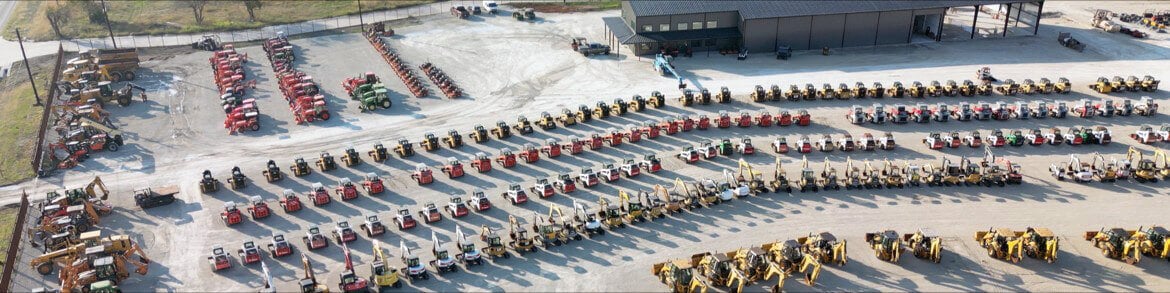
Himes Equipment, based in Van Alstyne just north of Dallas-Fort Worth, carries a consistent inventory of used compact equipment suited for urban construction work in both the DFW and Austin markets. Every machine on our 21-acre lot is owned outright, video documented, and verified lien-free before it's listed. Our bilingual team works with urban contractors across North Texas to match the right compact loader, mini excavator, or skid steer to the specific job conditions and budget at hand.
Browse our used construction equipment for saleto see our current compact equipment inventory, or give us a call and our team will help you find the right machine for your next Dallas or Austin project.